❮
![Large Image]() ❯
❯
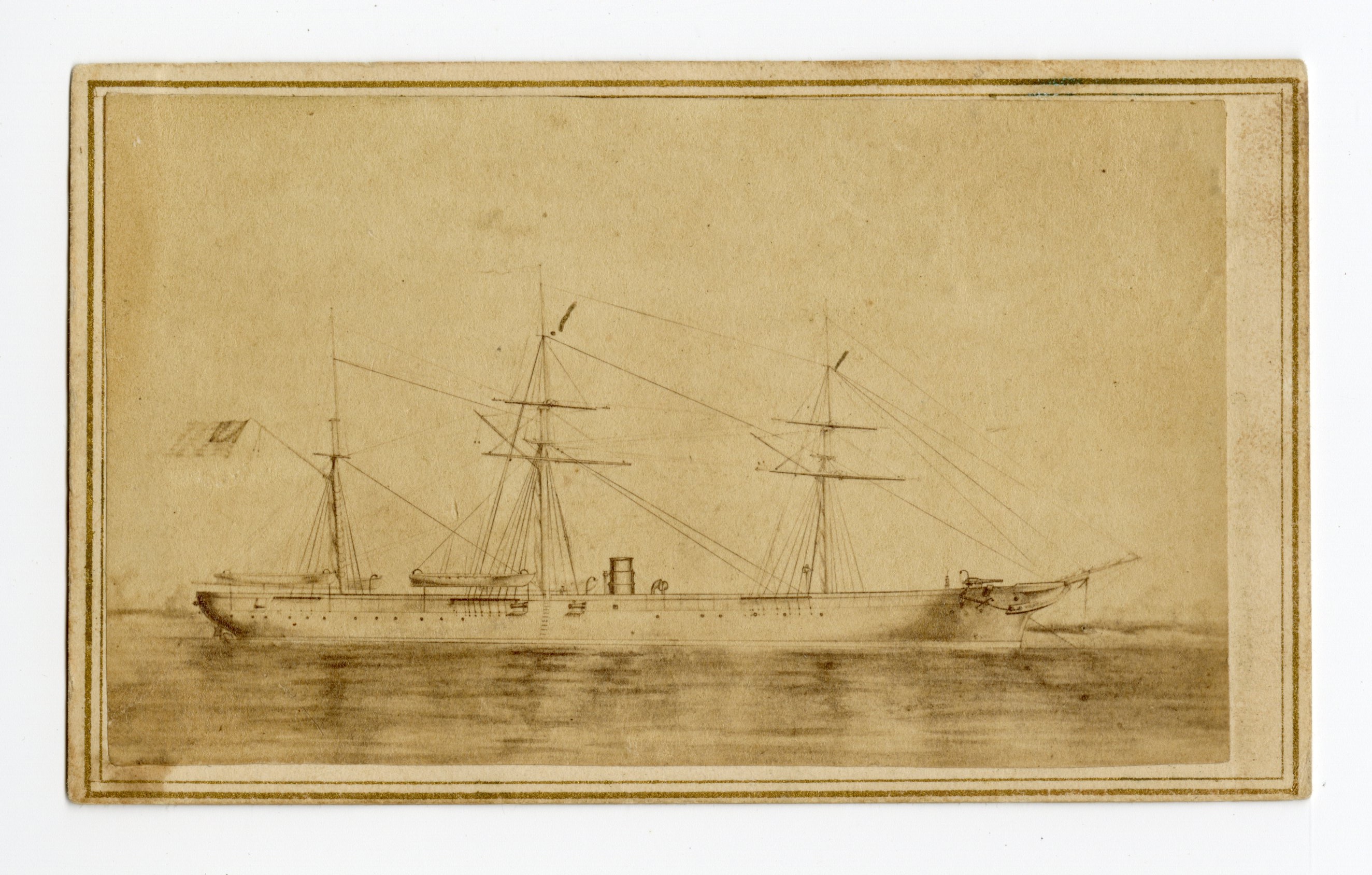
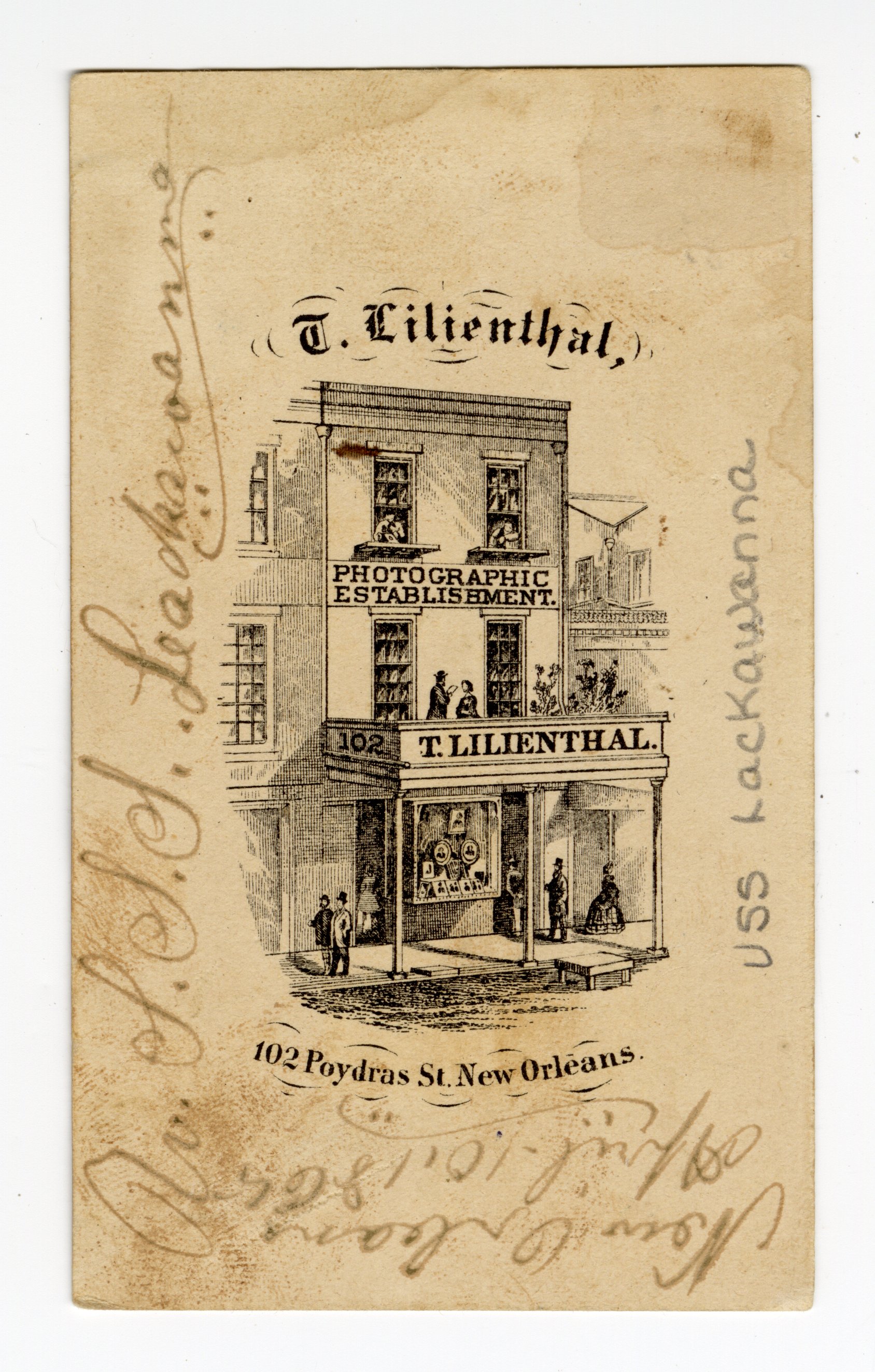
USS Lackawanna
Item NMC-11947
Price: $350.00
Description
The first USS Lackawanna was a screw-propelled sloop-of-war in the Union Navy during the American Civil War. She was named after the Lackawanna River in Pennsylvania.The new screw sloop-of-war departed New York on 20 January 1863 to join the Union blockade of the Confederate coast. She reported to the West Gulf Blockading Squadron at Pensacola, Florida, early in February 1863 and for the remainder of the war served along the Gulf Coast of the Confederacy, principally off Mobile Bay, Alabama. Lackawanna took her first prize – Neptune – on 14 June 1863 after a long chase in which the 200 long tons (200 t) Glasgow-registered ship had jettisoned her cargo trying to escape. Lackawanna scored again the next day, capturing the steamer Planter as the blockade runner attempted a dash from Mobile, Alabama, to Havana, Cuba, laden with cotton and resin.
Following duty along the Texas coast near Galveston in March and April 1864, Lackawanna returned to the blockade of Mobile early in May 1864 to prevent the escape of the Confederate ram CSS Tennessee. During the summer of 1864 she served in the blockade while preparing for Rear Admiral David Farragut's conquest of Mobile Bay.
On 9 July 1864, with Monongahela, Galena, and Sebago, she braved the guns of Fort Morgan to shell the steamer Virgin, a large blockade runner aground at the entrance of Mobile Bay. Their guns forced a Confederate river steamer to abandon efforts to assist Virgin, but the next day the Confederates refloated the blockade runner, which reached safety in Mobile Bay.
Closing Mobile was an important part of the Union strategy to isolate and subdue the Confederacy. At dawn on the morning of 5 August 1864, Farragut's ships crossed the bar and entered Mobile Bay. A field of naval mines and a Confederate squadron led by CSS Tennessee blocked their advance. Farragut's lead monitor, Tecumseh, struck a mine and sank in seconds. The Confederate flagship, Tennessee, vainly tried to ram Brooklyn, and the action became general, raging for more than an hour. At one point in the struggle, Lackawanna rammed Tennessee at full speed, causing Tennessee to list, and later Lackawanna collided with Farragut's flagship Hartford while attempting to ram Tennessee again, shortly before Tennessee struck her colors. Farragut's success in the Battle of Mobile Bay closed the last major Confederate port on the Gulf of Mexico.
Twelve of Lackawanna's sailors received the Medal of Honor for their actions during the battle:
Seaman John M. Burns
Landsman Michael Cassidy
Landsman Louis G. Chaput
Landsman Patrick Dougherty
Captain of the Top John Edwards
Landsman Samuel W. Kinnaird
Seaman Adam McCullock
Boatswain's Mate William Phinney
Captain of Forecastle John Smith
Armorer George Taylor
Quarter Gunner James Ward
Quartermaster Daniel Whitfield
Following the victory at Mobile Bay, Lackawanna continued to operate in the Gulf of Mexico, enforcing the blockade until after the end of the Civil War in April 1865. She departed Key West, Florida, on 24 June 1865, reached New York City on the 28 June 1865, and decommissioned at New York Navy Yard on 20 July 1865.
Source: Wikipedia